Warehouse business energy and utilities
A warehouse’s energy goes on lighting large spaces, heating them and, in some sites, keeping goods cold, with handling equipment charging between shifts. We look at when your power is used as well as how much, and quote electricity and gas separately.
- Half-hourly data, capacity and time bands taken into account
- Fixed, variable and flexible contracts explained without a sales pitch
- Goods in transit and stock cover through FCA-authorised partner brokers
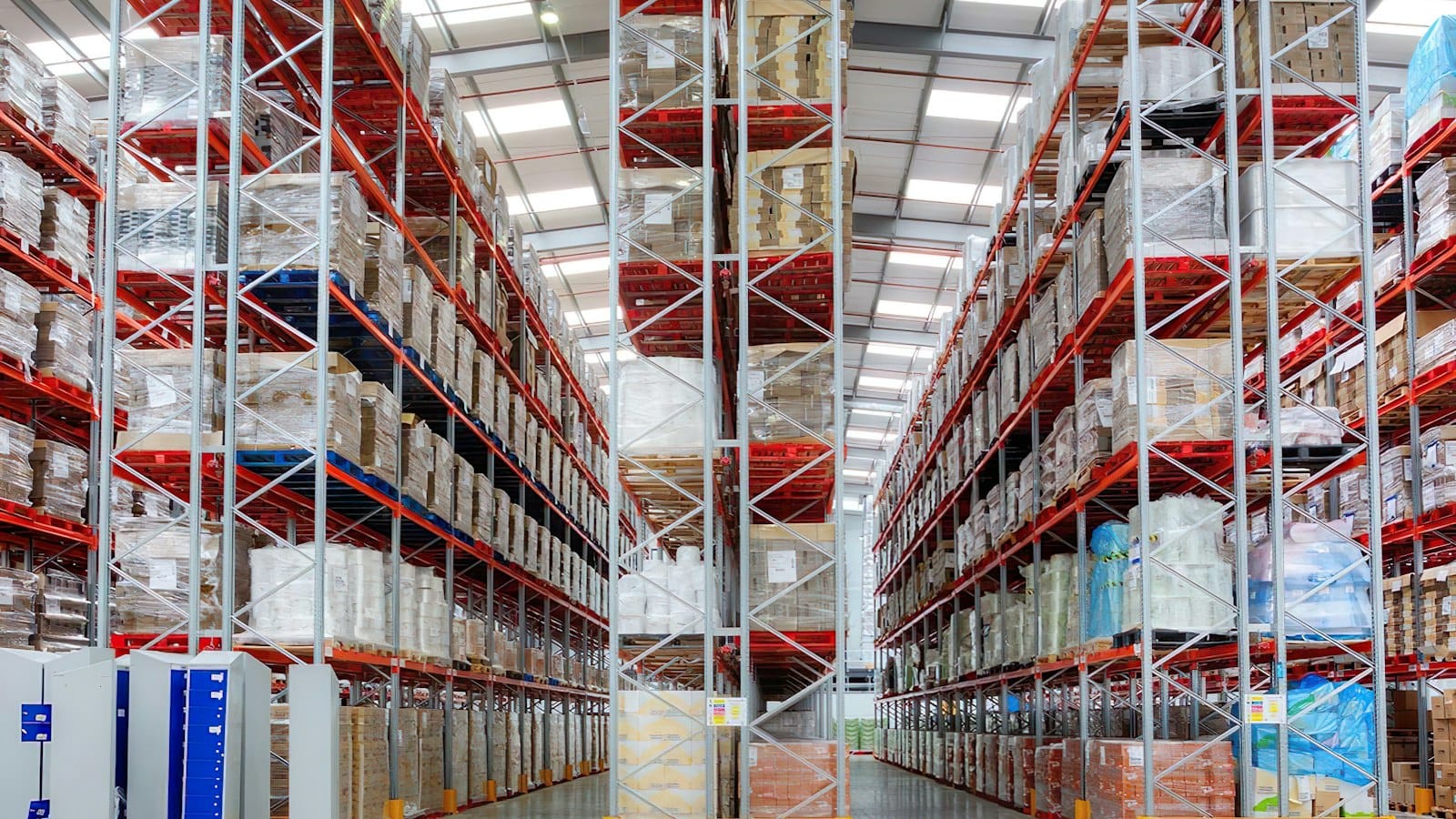
How Helios helps warehouses.
Large buildings, long hours and half-hourly meters. Helios checks the detail on your bills and keeps every site on one list.
Half-hourly data used properly
Your half-hourly data, agreed capacity and time bands checked line by line before any price is compared.
Fixed, variable or flexible explained
We set out how each contract type works for your usage, so you choose with the facts in front of you.
One site or a network
Every warehouse checked against its own consumption, with all end dates and documents on one list.
Cardboard and packaging collected
Cardboard, wrap and general waste collections matched to what goes through your doors.
What warehouses usually need from us
Business electricity
Lighting, heating, chilled storage and equipment charging, often on half-hourly meters.
Where warehouse energy goes
A few big systems
The Carbon Trust says warehouse energy use is concentrated in a few key systems: lighting, heating and, in some cases, refrigeration.
Source: Carbon Trust (2019)
Handling equipment
The same guide covers forklifts, cranage and automation. Charging at the wrong time of day can cost more on time-banded rates.
Source: Carbon Trust (2019)
Evening peak rates
On half-hourly supplies, red-band rates apply in the weekday early evening, for example 16:00–19:00 in NGED’s Midlands area.
Source: NGED
Fixed, variable or flexible contracts: how each works
Ofgem describes three main types. Fixed contracts fix unit rates and standing charges for the length of the contract. Variable contracts let the price go up or down during the contract. Flexible contracts let a business fix the price of its energy in smaller portions, at times when market conditions are better.
None is right for everyone. We explain how each would have treated your own half-hourly data and let you decide, with the contract terms in writing before you sign.
Source: Ofgem
Half-hourly meters, agreed capacity and residual charges
On half-hourly supplies, NGED charges capacity per kVA per day on your agreed Maximum Import Capacity, with excess usage typically charged at two or three times the base rate. Network residual costs are now fixed daily charges, and half-hourly sites are banded on their 24-month average capacity.
Those charges sit alongside your unit rates, so we compare whole bills, not unit prices alone.
Larger operators: ESOS phase 4 dates
The Energy Savings Opportunity Scheme applies to companies with 250 or more employees, or turnover over £44 million together with a balance sheet over £38 million. The phase 4 qualification date is 31 December 2026 and notification is due by 5 December 2027.
Source: GOV.UK
One site or a network
A single warehouse
One meter, but often a complex bill. We read the capacity, time bands and residual charges before we compare.
Several sites
Each site has its own capacity and profile. We check every site on its own data. See multi-site groups.
Keeping contracts and documents in order
For each site we record:
- Meter type, agreed capacity and end date
- Notice window for each contract
- Waste transfer notes or season ticket
- Insurance renewal dates for stock and goods in transit
What to send us
Send what you have and we will ask for anything else we need.
- Your latest electricity bill, all pages
- 12 months of half-hourly data, if available
- Your gas bill
- Waste invoices
- Your insurance schedule, if you want a quote
How Helios looks after a warehouse.
Here is how a warehouse’s contracts look in the Helios portal: every service, every end date and every document in one place.
- One contact for every service and every site
- Every end date and notice window tracked, with reminders
- Rates exactly as printed: electricity and gas always quoted separately
- Contracts, documents and meter readings in your Helios portal
 Warehouse · Distribution parkIllustration only
- ElectricityHalf-hourly meter30/09/2027Live
- GasSpace heating30/09/2027Live
- WasteCardboard and wrap31/03/2027Renewal due
- TelecomsBroadband and phones30/06/2027Live
- InsuranceStock and goods in transit01/11/2027Live
What we may find
It depends on your data and contracts. These are the things we check.
- Agreed capacity that no longer matches use
- Charging that falls in red-band hours
- A contract that rolled over unnoticed
- Cardboard collected with general waste
Get a quote for your warehouse
Tell us about your business and we’ll be in touch. We check your contract end dates and notice windows before we quote.
Prefer to talk? Call 020 4628 5727, Monday to Friday, 9am to 5pm.
Frequently asked questions
What is a goods in transit policy?
Cover for goods being moved by vehicle against theft, loss and damage. Marsh Commercial notes insurers may reduce a payout if the goods are underinsured. We introduce you to FCA-authorised partner brokers, who arrange the cover.
Should stock be insured at sale price?
The ABI says stock should be insured at cost price, not sale price.
Do warehouses have to follow Simpler Recycling?
Yes. Warehouses in England must keep dry recyclables, food waste and general waste apart. Businesses with fewer than 10 full-time equivalent employees have until 31 March 2027.
How often do forklifts need checking?
HSE’s LOLER guidance expects daily checks of lift trucks and a thorough examination at least every 12 months, or every 6 months for equipment that lifts people.
Bring your warehouse into one place.
Send us a recent bill and we will start with your contract dates and prices. Add the rest of your services whenever you are ready.