Business energy for manufacturers and factories
For a manufacturer, the unit rate is only part of the bill. Capacity, time bands, levies and the schemes you may qualify for all change what you pay. We read the whole bill, quote electricity and gas separately, and point you to the official guidance for the schemes.
- Industrial bills read line by line
- Climate Change Levy, CCAs, BICS and ESOS dates set out plainly
- Broker fees shown in your contract terms; Energy Ombudsman member
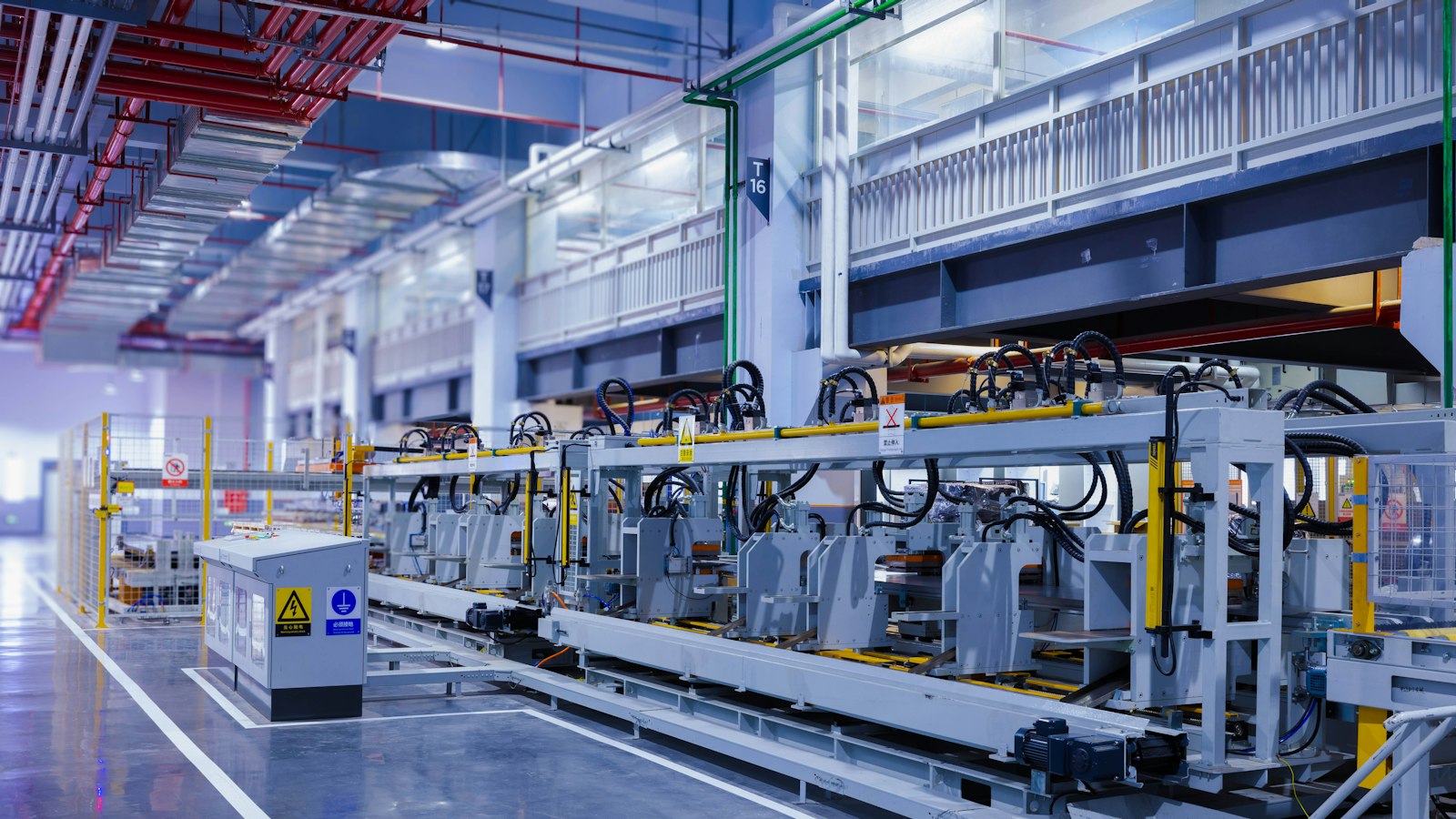
How Helios helps manufacturers.
Industrial bills carry capacity charges, levies and schemes that are easy to miss. Helios reads them line by line.
Industrial bills read line by line
Capacity, half-hourly charges, levies and taxes checked on your actual bills before any price is compared.
Levies and relief schemes checked
We check how the Climate Change Levy applies to your site and point out where an agreement or scheme may apply.
Contracts that fit how you operate
Fixed, flexible and multi-year options set out side by side, against your own usage profile.
One contact for the whole site
Electricity, gas, water, waste and insurance renewals on one list, with every document in your portal.
The British Industrial Competitiveness Scheme
Announced on 1 October 2026, the scheme aims to cut electricity costs by up to 25% for eligible manufacturers in England, Scotland and Wales by exempting them from the indirect costs of the Renewables Obligation, Feed-in Tariffs and the Capacity Market. Applications opened on 1 October 2026 and close on 30 November 2026.
GOV.UK’s guidance sets the tests: registration at Companies House, an eligible SIC code with an electricity intensity threshold, eligible products made at the site, and at least 33 MWh of grid electricity a year at each site. Relief is worked out per site; the Renewables Obligation and Feed-in Tariff exemptions start in April 2027 and the Capacity Market exemption in October 2027.
We do not decide eligibility and cannot secure the relief for you. Apply through GOV.UK; we make sure your supply contracts and data are in order.
Sources: GOV.UK, GOV.UK guidance
Climate Change Levy and Climate Change Agreements
The Climate Change Levy main rate is £0.00801 per kWh on electricity and gas from 1 April 2026, rising to £0.00827 from 1 April 2027. Facilities in a Climate Change Agreement get a discount: 92% on electricity and 89% on gas.
CCAs are voluntary agreements for eligible energy-intensive facilities. A site qualifies only if at least 70% of the reckonable energy supplied is used in the installation, and applications to join an existing umbrella agreement run from 1 January to 31 August each year from 2026 to 2029. The scheme runs to 31 March 2033.
Sources: GOV.UK CCL rates, GOV.UK CCA guidance
Reading an industrial bill
Alongside unit rates, half-hourly supplies carry a capacity charge per kVA per day, excess capacity charges typically two or three times the base rate, reactive power charges when power factor falls outside 0.95 to unity, and fixed daily residual charges banded on 24-month average capacity. Red, amber and green time bands vary by network operator.
What manufacturers usually need from us
Questions manufacturers ask us
Are broker fees clear?
Make UK advises manufacturers to make sure fees, contracts and obligations with energy brokers are clear. Ours appear in your contract’s principal terms.
Source: Make UK
Do we need ESOS?
Companies with 250 or more employees, or turnover over £44m and a balance sheet over £38m, are in scope. Phase 4 notification is due by 5 December 2027.
Source: GOV.UK
Where does process energy go?
The Carbon Trust’s manufacturing guide covers motors and drives, compressed air, process heating and cooling, lighting, boilers and ventilation.
Source: Carbon Trust (2018)
One factory or several sites
A single site
We read your bill and half-hourly data, check the end date and notice window, then compare.
Several sites
BICS relief is calculated per site, and each site has its own capacity and profile. We keep them on one list. See multi-site groups.
Keeping contracts and documents in order
For each site we record:
- Meter, agreed capacity and half-hourly data
- Contract end date and notice window
- CCA facility status, if any
- Trade effluent consent
- Insurance renewal dates
What to send us
Send what you have and we will ask for anything else we need.
- Latest electricity and gas bills for each site
- 12 months of half-hourly data
- Your CCA certificate, if you have one
- Water and trade effluent bills
- Your insurance schedule, if you want a quote
How Helios looks after a factory.
Here is how a factory’s contracts look in the Helios portal: every service, every end date and every document in one place.
- One contact for every service and every site
- Every end date and notice window tracked, with reminders
- Rates exactly as printed: electricity and gas always quoted separately
- Contracts, documents and meter readings in your Helios portal
 Factory · Works RoadIllustration only
- ElectricityHalf-hourly meter31/12/2027Live
- GasProcess heat31/12/2027Live
- WaterProcess waterRollingLive
- WasteGeneral and recycling30/06/2027Live
- InsurancePartner broker01/03/2027Renewal due
What we may find
It depends on your bills and data. These are the things we check.
- Reactive power or excess capacity charges
- A CCA discount not showing on the bill
- Contracts with end dates spread across the year
- Trade effluent charges that need checking
Get a quote for your factory
Tell us about your business and we’ll be in touch. We check your contract end dates and notice windows before we quote.
Prefer to talk? Call 020 4628 5727, Monday to Friday, 9am to 5pm.
Frequently asked questions
Is my business eligible for BICS?
Check GOV.UK’s guidance for applicants. Eligibility depends on your SIC code, electricity intensity, the products made at each site and at least 33 MWh of grid electricity a year per site.
What is a Climate Change Agreement?
A voluntary agreement for eligible energy-intensive facilities that gives a discount on the Climate Change Levy: 92% on electricity and 89% on gas.
Should a manufacturer choose a fixed or flexible contract?
It depends on your appetite for risk and how you prefer to manage your energy costs. We set out how each would work with your own data; the decision is yours.
Does a factory need trade effluent consent?
If you discharge trade effluent to the public sewer, you need consent from the water company. Your water retailer submits the application.
Bring your factory into one place.
Send us a recent bill and we will start with your contract dates and prices. Add the rest of your services whenever you are ready.