Energy and utilities for garages, workshops and industrial units
Lifts, compressors, welders and machinery make a workshop’s electricity bill more complicated than most: capacity charges, time bands and half-hourly data can matter as much as the unit rate. We read the whole bill, not just the headline price.
- Capacity, time-band and standing charges read as printed
- Electricity and gas always quoted separately
- Card machines and phone lines for the front desk
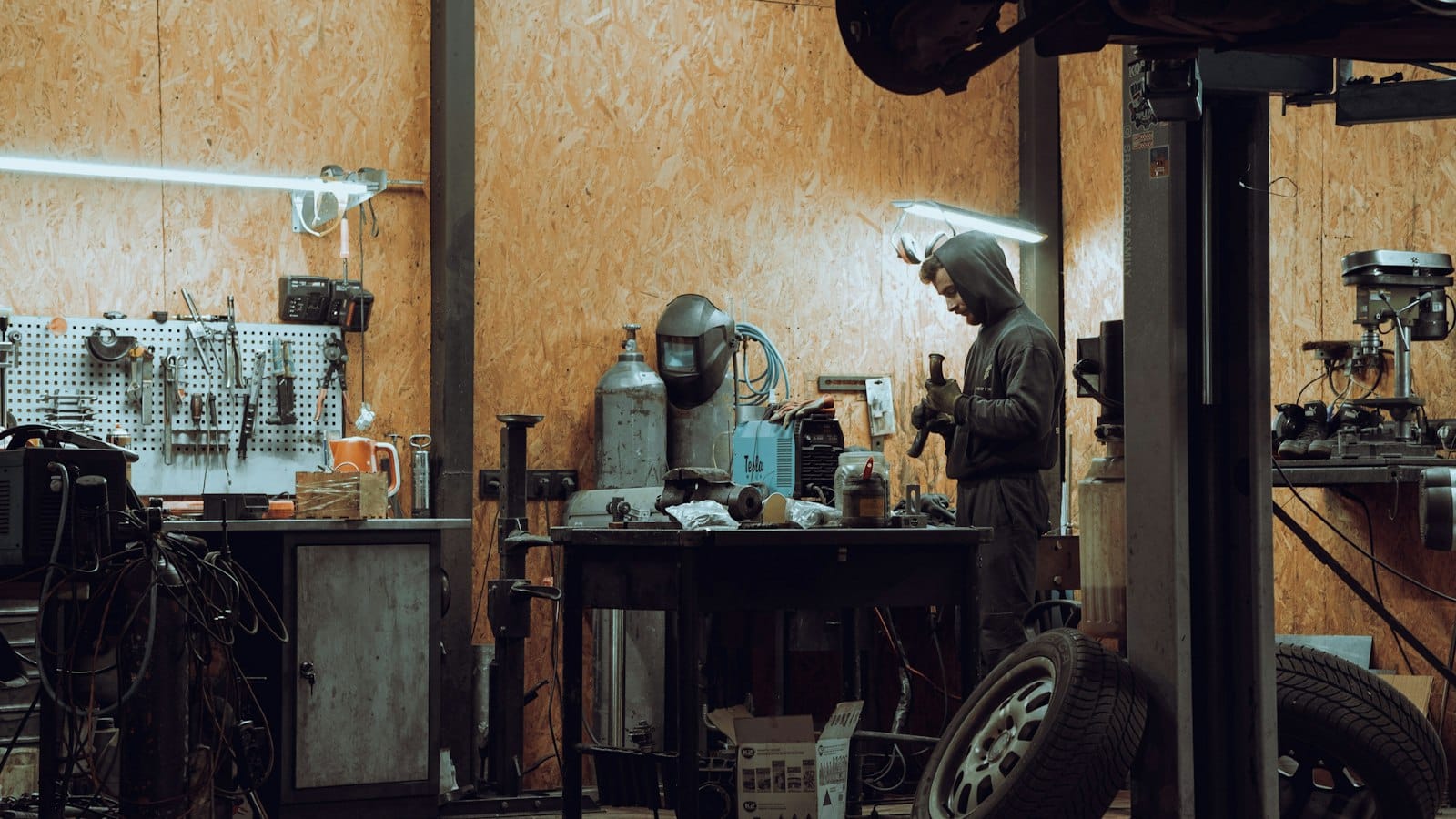
How Helios helps garages and workshops.
Machinery, compressors and extraction make workshop bills complicated. Helios reads them line by line and keeps every contract in one place.
Capacity and time bands checked
Agreed capacity, time bands and half-hourly charges read line by line, so you only pay for the supply you need.
Machinery on the right contract
Compressors, extraction and machinery shape your usage. We compare prices against your own consumption.
Waste and effluent checked
General waste and recycling collections, and trade effluent charges checked on your water bill.
One contact for the unit
Electricity, gas, water, waste, card machines and insurance renewals on one list.
What workshops usually need from us
Agreed capacity, time bands and half-hourly meters
On half-hourly supplies, distribution charges include a capacity charge per kVA per day based on your agreed Maximum Import Capacity. National Grid Electricity Distribution says exceeding it brings an excess charge typically two or three times the base rate, and a reactive power charge applies if your power factor falls outside 0.95 to unity.
Unit rates can also change by time band. In NGED’s Midlands area, for example, the red band runs 16:00–19:00 on weekdays; each network operator sets its own bands. Since 1 April 2017, larger maximum-demand meters (profile classes 5 to 8) have been settled half-hourly.
If you need a bigger or three-phase supply, that is a job for your network operator. We arrange the supply contract once the connection is in place.
Compressed air, extraction and machinery
In 2012 the Carbon Trust estimated that compressed air accounts for around 10% of UK industry’s electricity use. Leaks, extraction left running and machines idling between jobs all show up on the bill, which is why we look at when your power is used as well as how much.
Source: Carbon Trust (2012)
Hazardous waste, trade effluent and inspections
If your workshop produces hazardous waste, you fill in consignment notes and keep a register for 3 years at the premises. Workshops are also covered by Simpler Recycling in England. Hazardous waste needs a specialist collector; we arrange the general, cardboard and dry mixed recycling collections.
Discharging trade effluent to the public sewer needs consent from the water company; United Utilities gives a car wash as an example, and says your water retailer submits the application on your behalf.
Separate from your contracts, HSE rules require thorough examination of lifting equipment at least every 12 months (every 6 months for equipment that lifts people), and a written scheme of examination for compressed air systems above 0.5 bar.
Sources: GOV.UK, United Utilities, HSE LOLER, HSE PSSR
What we see on workshop bills
Capacity set too high or too low
Capacity is charged per kVA per day, and going over it costs more. NGED advises asking only for the capacity you realistically need.
Source: NGED
Residual charges
Network residual costs are fixed daily charges, with half-hourly sites banded on their 24-month average capacity.
Source: NGED
Keeping contracts and documents in order
We note the details that drive a workshop’s bill before we quote.
- Meter type and whether it is half-hourly
- Agreed capacity (kVA) and any excess charges
- Electricity and gas end dates and notice windows
- Trade effluent consent, if you have one
- Insurance renewal dates
What to send us
Send what you have and we will ask for anything else we need.
- Your latest electricity bill, all pages
- Your gas bill, if you have gas
- Half-hourly data, if your supplier provides it
- Your water bill
- Card machine statements, if you take cards
How Helios looks after a workshop.
Here is how a workshop’s contracts look in the Helios portal: every service, every end date and every document in one place.
- One contact for every service and every site
- Every end date and notice window tracked, with reminders
- Rates exactly as printed: electricity and gas always quoted separately
- Contracts, documents and meter readings in your Helios portal
 Workshop · Unit 12Illustration only
- ElectricityHalf-hourly meter30/04/2027Live
- GasSpace heating30/04/2027Live
- WaterTrade effluent checkedRollingLive
- WasteGeneral and recycling31/01/2027Renewal due
- InsurancePartner broker01/09/2027Live
One unit or several
A single unit
We read every line of the bill and tell you which charges your contract can change and which it cannot.
Several units or branches
Each unit has its own capacity, meter and dates. We keep them on one list. See multi-site groups.
What we may find
It depends on your bills. These are the things we check.
- Excess capacity charges that keep recurring
- Reactive power charges on the bill
- A contract running on out-of-contract rates
Get a quote for your workshop
Tell us about your business and we’ll be in touch. We check your contract end dates and notice windows before we quote.
Prefer to talk? Call 020 4628 5727, Monday to Friday, 9am to 5pm.
Frequently asked questions
What are kVA or capacity charges?
On many larger supplies, the network charges a daily amount for each kVA of capacity you have agreed. Going over the agreed capacity usually brings an excess charge.
Do I need a three-phase supply?
That depends on your machinery. Upgrades are done by your network operator; we arrange the supply contract afterwards.
How should a garage dispose of hazardous waste?
Use registered carriers and permitted sites, complete consignment notes and keep a register for 3 years. Check the waste classification guidance for each item.
How often do vehicle lifts need examining?
HSE’s LOLER guidance says lifting equipment needs a thorough examination at least every 12 months, or every 6 months if it lifts people.
Bring your workshop into one place.
Send us a recent bill and we will start with your contract dates and prices. Add the rest of your services whenever you are ready.